
Case Study
Inside
Interior
Here's how I designed a premium portfolio website for an interior design practice mockup, and the thinking behind every deliberate choice.
Catagory - Interior Design Portfolio
Direction - Editorial · Luxury · Minimal
Live Site - Inside Interior
The Brief -
Two briefs.
One page.
When I started on this project, I was designing for two audiences at once. The obvious one was the interior designer's potential clients, people looking to transform their homes or offices, who need to trust someone with their space and their money before they pick up the phone.
But the second audience was just as important: anyone looking at my portfolio. This page had to prove that I can build something that genuinely feels premium — not just something that works, but something that makes you stop scrolling.
That dual pressure shaped every decision. I couldn't just make something functional. It had to feel like the kind of site that attracts high-end clients, because in a sense, that's exactly what it needed to do, twice over.
Design Decisions
The choices that define it
Every element you see was considered. Here are the four decisions I'm most proud of, and why I made them.
01
I went portrait. on purpose
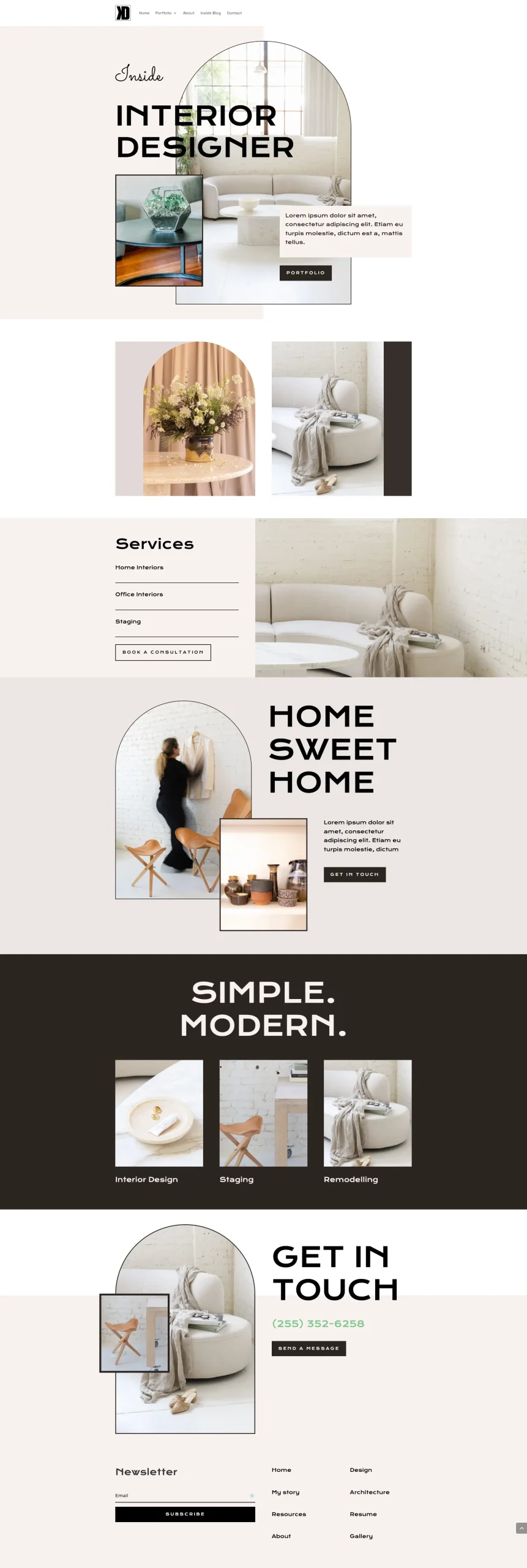
Most portfolio websites default to wide, landscape images. They're easy to use as banners. They fill horizontal space cleanly. I went the other direction entirely. Every primary image on this page is tall and narrow, proportioned like pages from an architecture magazine, not frames from a widescreen camera.
This was the most deliberate visual choice I made. Portrait images slow the scroll. They take up more vertical space, which means the visitor spends more time with each photograph. They carry a quality you immediately associate with print editorial — the kind of imagery you'd find in a high-end interiors magazine, not a website template. The result is a page that feels considered, not convenient.
02
Restraint is the luxury signal
I stripped a lot out of this design. The logo is black and white, no colour, no gradient, no mark, trying to compete with the photography. The navigation has five items and one dropdown. The palette is almost achromatic.
None of that is laziness. Restraint is how luxury brands communicate confidence. When you over-explain, you sound defensive. When you pack a page with features and copy and colour, you signal that you're trying to convince someone. A page that talks less, but means more, says something very different: it says the work speaks for itself, and we both know it.
03
Typography borrowed from print
The hero uses a small-caps label above a large display heading "Inside" sitting over "Interior Designer." That's a typographic move I lifted straight from editorial design. It creates hierarchy without weight, the ranking comes from scale and case, not bold type or colour.
I wanted the typography to feel like something you'd open a magazine to, not something you'd see on a SaaS homepage. That distinction matters when the client is a luxury service provider. The fonts, the spacing, the sizing, all of it was designed to feel authoritative in the quietest way possible.
04
The section order is the sales strategy
I ordered the sections the way a good conversation is ordered: earn trust before you ask for anything. The portfolio comes before the service list. The imagery comes before the copy. The "get in touch" prompt comes after you've seen the work, not before.
It sounds obvious when you say it out loud, but most service websites get it backwards, they open with the pitch before they've given you any reason to care. This page builds credibility first, then names its services, then invites enquiry. That sequence isn't accidental. It's the whole conversion strategy.
The section header "Simple. Modern." isn't just copy. It's a brief. I used it as a filter for every single decision on the page.
— Design Philosophy, Inside Interior
Page Architecture
How I built the flow
Step 01
Hero
Set the scene
Name. Discipline. One confident image. No lengthy copy, no scroll-bait. You know exactly where you are within two seconds of landing.
Step 02
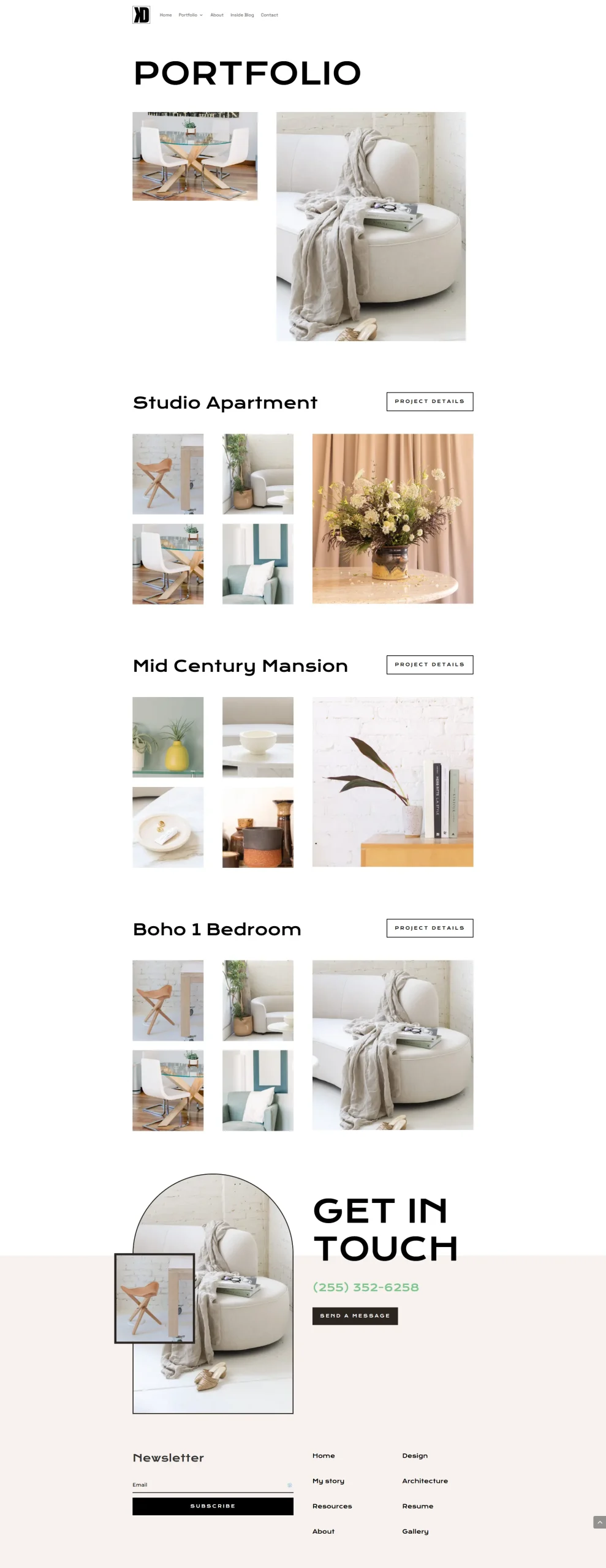
Portfolio
Earn trust first
Proof before pitch. I let the work do the convincing before I named a single service. By the time you reach the service list, you already believe.
Step 03
Services
Name the offering
Home Interiors, Office Interiors, Staging. Clear. Unadorned. With a direct CTA to book, positioned only after trust has been built.
Step 04
Home Sweet Home
Humanise
A tonal shift. The language softens, the imagery becomes intimate. This section makes the brand feel approachable, not just aspirational.
Step 05
Simple. Modern.
Reinforce
Three services in a clean card grid. The heading doubles as the brand position statement. What we do, and how we think about it, in two words.
Step 06
Contact
Catch every intent
Phone number, message form, newsletter. Multiple entry points for different visitor temperatures, from "I'm ready to call" to "I'm still browsing."
What I
Made
I'm proud of this one. Not because it's flashy, it's the opposite of flashy but because it does something genuinely difficult: it communicates taste without stating it.
Anyone can write "luxury interior design" in a heading. What's harder is building a page where the visitor feels something before they read a word. Where the proportions of the images, the space between elements, and the weight of the typography all add up to a mood, a sense of quality, before the conscious mind has processed anything.
That's what I was aiming for here. A page you arrive at and just… trust. Not because it told you to. Because it felt like it already knew what it was doing.
The work I'm most proud of is usually the stuff I removed. Every element that isn't on this page is a decision. The restraint is the design.
Want something
built like this?
Let's talk about your project.

Enthusiastic and creative freelance web developer and SEO with a passion for translating ideas into visually compelling designs.
Contact Us
South Africa
0645121992
kyle@kyledesigns.co.za